

I can still feel the heat of Hanoi.
Vietnam had been one of those places on my bucket list forever. In 2021, I had actually tried to go, but a visa mishap foiled the entire plan. Anyone who travels a lot knows that even the best-laid travel plans can unravel. Sometimes the travel spirits simply are not in your favor, and a visa issue, missed connection, illness, weather, or some completely random turn of events can derail a trip you have been dreaming about for months.
When I finally had the chance to go to Vietnam, I was coming off a 12-day trek around China. My trip through China was absolutely awe-inspiring and incredible, and I will definitely do another post entirely about that experience. By the end of those 12 days, though, my body was completely worn down. A bout of food poisoning followed by a cold had taken a real toll on me.
Sometimes travel, like life, feels like a full-contact sport. There are trips that test your endurance, your energy, your patience, and your ability to keep moving when your body is clearly asking for a break.
By the time our plane landed in Hanoi, I was battling a full-out cold with a runny nose, sore throat, and a voice that had gone completely scratchy. I had taken whatever cold medicine I still had in my bag just to help me make it through customs and get to the hotel.
It was also 104 degrees outside.
I could feel the heat before we had even fully gotten off the plane. As soon as the doors opened, it reminded me of opening an oven while bread is baking and having that thick rush of heat hit your face. The air felt sticky and dense. You could smell the herbaceousness of the city mixed with airplane fumes, and that heavy heat wrapped around us as we made our way off the plane.
There was something about arriving in Hanoi that immediately felt visceral. The heat, the smells, the noise, the scooters, the movement, the food, and the density of the city all hit you at once. Hanoi is a visual feast, and I will do an entirely separate post on some of my favorite things there because the city deserves its own story.
Part of the reason I had wanted to come to Vietnam for so long came from watching Anthony Bourdain.
I will never forget seeing the episode where Bourdain sat down with President Barack Obama in Hanoi to eat bún chả. Watching the two of them sitting on those little plastic stools, eating noodles and grilled pork and drinking beer, made me want to experience that exact moment in the city for myself. I had been thinking about going to that restaurant for years.
So yes, one of my missions in Hanoi was absolutely to go to that restaurant, sit in the same place, and have my own Bourdain moment.
There was another reason I wanted to come to Vietnam, though, and that had to do with something I had become fascinated with before the trip: the Red Dao herbal bath.
The Red Dao are an ethnic minority community in northern Vietnam, particularly in the mountainous region around Sa Pa. One of their most famous traditions is an herbal bath that has been passed down from generation to generation, traditionally through the women in the family.
I had gone deep into researching it before the trip.
The women forage for the herbs used in the bath, gathering different leaves, roots, bark, and plants from the mountains. The formulas can change based on the season, and even the thickness and density of the bath can vary between summer and winter. The plants are boiled together until the water becomes this deep, murky burgundy-purple liquid that almost looks like red wine.
I had also read that the timing of when the plants are gathered can follow specific lunar cycles and that the knowledge of which plants to use, how to combine them, and how to prepare the bath is passed down through generations.
Traditionally, the bath has been used for recovery, fatigue, soreness, illness, and other physical ailments. Women have also used it as part of their recovery after pregnancy and childbirth.
Given the fact that I had arrived in Hanoi fighting off a nasty cold, the timing felt almost too perfect.
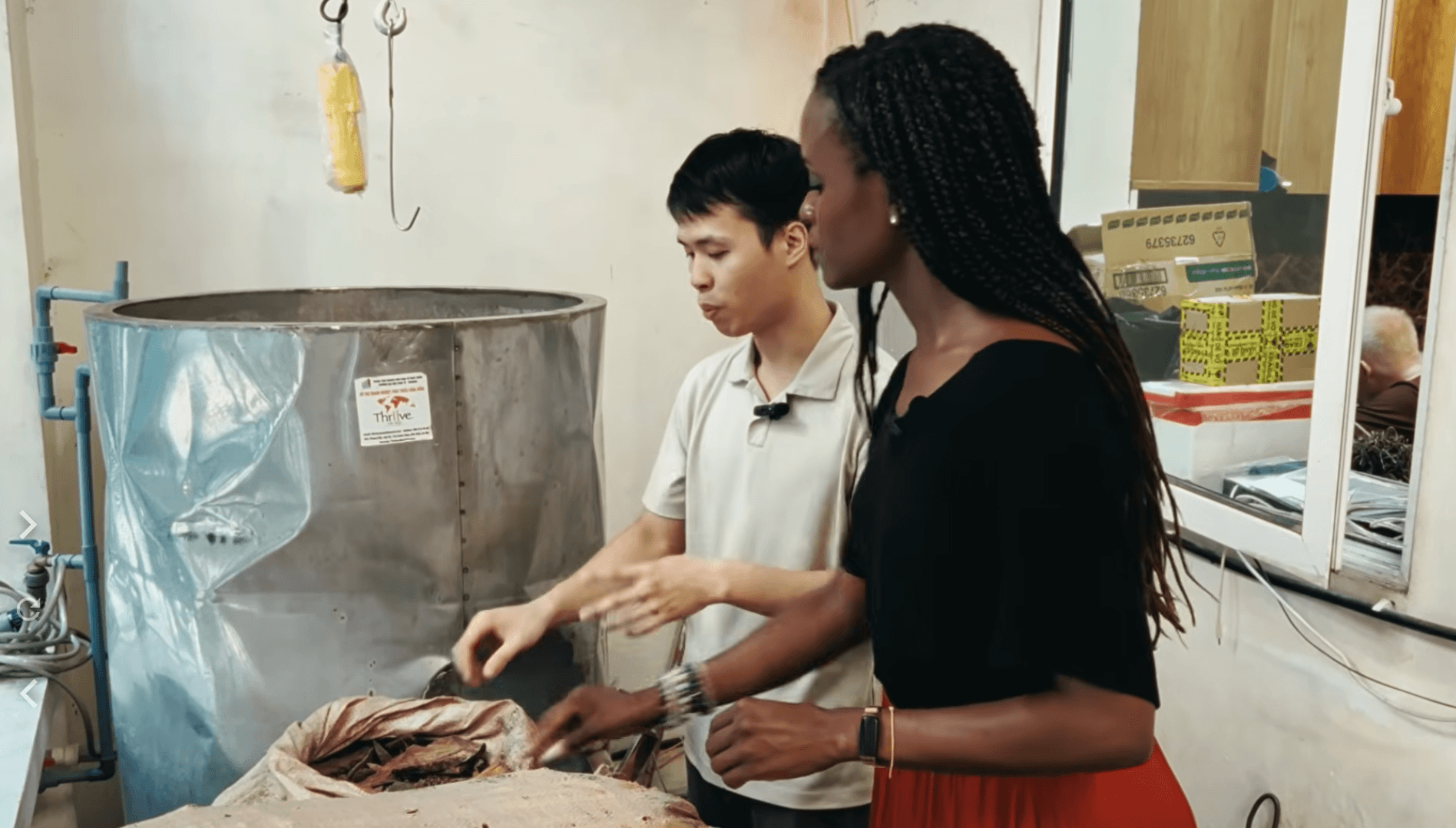
The next day, after settling into Hanoi and spending some time experiencing the energy of the city, we made our way to Dao’s Care. It is tucked away down a few narrow city alleyways, and once we arrived, I had the chance to meet the team and learn more about the Red Dao bath and the tradition behind it.
I had read about this bath before ever setting foot in Vietnam, so finally being there and seeing it in person felt surreal.
By the time I was ready to try it myself, I was excited, exhausted, and genuinely hoping it might give me some relief.
If you watch the YouTube video from the episode, you can actually hear how sick I was. My voice is scratchy and hoarse throughout the experience.
Before I got into the bath, they warned me that the water would be extremely hot and told me that after about ten minutes, I might feel like I needed to get out.
I remember thinking I would probably be fine because I love heat. I love hot weather, saunas, steam rooms, and anything warm. I had even been relishing the 104-degree temperatures in Hanoi.
That confidence lasted about ten minutes.
Once I had been sitting in the bath for a while, the heat became completely overwhelming. I suddenly felt like I could not breathe properly. It felt like something was pressing against my chest, and the temperature started to feel inescapable. I became lightheaded and dizzy and realized that I needed to get out immediately.
I climbed out of the wooden tub and sat outside of it for about five minutes, catching my breath and seriously thinking about my life choices.
At the same time, I was completely fascinated by what I was experiencing. The smell of the herbs was rich and earthy, and there was something incredibly grounding about sitting in this wooden tub filled with deep burgundy-purple water surrounded by steam and the scent of plants.
Once I felt steady again, I added cold water to the bath to temper the temperature, climbed back in, and finished the experience.
Afterward, when I got out, I noticed something that surprised me.
I was not as congested.
I felt more energized.
My throat seemed less sore.
I remember thinking that it was strange because I had basically just spent time sitting in an herbal bath.
Later that day, my boyfriend and I went to lunch, and while we were talking, he noticed it too. He told me that I did not sound as hoarse as I had earlier.
That was the moment where I really started wondering whether there was something to this bath.
Was the Red Dao herbal bath one of those healing rituals that has been hiding in plain sight for generations? Should we all be climbing into wooden tubs filled with herbs the next time we get sick? Is this one of those recovery traditions that modern wellness culture is only beginning to rediscover?
I have no scientific way of telling you exactly what happened to me that day. What I can tell you is that I went into that experience congested, exhausted, hoarse, and fighting off a cold, and I came out feeling noticeably different.
That experience is also part of what continues to fascinate me about wellness traditions around the world. There are communities that have spent generations developing rituals around plants, food, heat, movement, rest, recovery, and caring for the body. Many of those traditions existed long before wellness became an industry.
Someone’s grandmother already knew which plant to use.
Someone’s community already knew when to gather it.
Someone had already learned that the human body sometimes needs heat, herbs, rest, and time to recover.
The Red Dao bath made me want to understand that tradition much more deeply.
When I go back to Vietnam, one of my goals is to travel north to Sa’Pa and spend time with the women who actually gather the plants. I want to walk through the mountains with them, learn what they are looking for, understand how they decide which herbs to use, and see how the entire ritual comes together from the forest to the bath.
For now, all I know is that somewhere in Hanoi, after arriving exhausted from China and battling one of the nastiest colds I had had in a while, I climbed into a wooden tub filled with a dark herbal bath that had been passed down through generations.
A few hours later, I could breathe a little better, my voice sounded clearer, and I became even more curious about what these women have known all along.